California Genealogical Society: Blog

Recent Posts

01 April 2020

Quarantine Quests: A Hobby With Infinite Possibilities

Chris Pattillo writes:

It’s times like these when I most appreciate being interested in family history research because I can do it from anywhere and the possibilities of how to spend my time are infinite. Now that I have so much extra time while I shelter-at-home, it is nice to enjoy a hobby that keeps me engaged endlessly. There’s no fear of feeling lonely when I am able to find new ancestors and share my discoveries with my siblings and cousins.
From your Ancestry account, look for ThruLines
on the DNA tab, then select "Filters" to view matches.

Two days ago, I was poking around on my Ancestry account on the ThruLines page, which is under the DNA tab, and I noticed for the first time a button labeled “Filters.” I clicked on that and saw a category for “Potential Ancestors.” What I found when I clicked on that choice is something I’ve been pursuing fervently for the past three years – ever since I nailed down my third-great-grandparents Hiram W. Gaines and Hulda Waller, while I was on my 2017 Genealogy Journey and traveling in the Southern United States–South Carolina to be exact.

Ever since that find, I’ve been seeking Hiram’s parents. I have worked pretty hard on this. Various searches led me to well-documented trees for Hiram Gaines (1725-1805) married to Margaret Teliaferro (1775-1783), but no matter how hard I tried I could not prove a connection to this family. These trees included several Hiram Gaineses. As it's a somewhat unusual name, I felt certain this was my family, but I could find no proof and did find negative clues that showed that I was wrong. Has this ever happened to you?
This screenshot shows me with a DNA connection to William S. Gaines
But the beauty of DNA is that it does not lie. ThruLines told me I have a DNA connection to William Shanklin Gaines (1757-1851) and that he is my fourth-great-grandfather: the man I have most wanted to find for three years. As a bonus, it also showed a DNA connection to his father, Hiram T. Gaines, my fifth-great-grandfather! Needless to say, I was pretty excited to find this but before I shared my discovery with others I thought I should make sure it was right, so I called CGS member Vinnie Schwarz and asked her about it. She confirmed that I could trust ThruLines. This is something I appreciate about CGS. I am grateful to be able to reach out to other CGS members, who are more knowledgeable than I am, and to be able to ask for guidance and confirmation. It is one of the best and most valuable things about being a member of our society–especially at times like these.

Have you made any big discoveries while you have been staying at home? Let us know and we will share your story.

Copyright © 2020 by California Genealogical Society

COVID-19 update: Library closed through May 6, Salt Lake City trip canceled


President Jim Sorenson has issued this update:

"The closure of the CGS library has been extended through May 6. All CGS classes and events have been canceled through the end of May. However, we are working on having some classes conducted via remote access; the first of these will be on April 9. Among the events canceled are the CGS research trip to Salt Lake City. Refunds are being issued for all canceled classes and events. 

I'm sure everyone knows that the closure and cancellations are a dynamic process and we can not say for sure when CGS will be able to resume normal operations at either the CGS library or the Oakland FamilySearch Library. The health of our patrons and volunteers is of paramount importance to us."

 
Copyright © 2020 by California Genealogical Society

31 March 2020

The Census: It Ain't What it Used to Be

image: United States Census Bureau


Wednesday, April 1, is the deadline for all U.S. households to respond to the 2020 census.  If you somehow haven't gotten around to it, Uncle Sam will soon be in contact (though the current pandemic situation will have an impact on operations). Of course, you really want to respond to this once-in-a-decade survey, because it's essential to get an accurate count of residents in each of the 50 United States and its five territories: population determines how much funding local communities receive and how many seats each state gets in Congress.

It's super easy to fill out your census questionnaire this year: you can do it either online, by mail, or by phone. If you've already filled out your form, you probably noticed how short it is. The 2020 census consists of just 9 questions. It asks the name, sex, and birth date of every person in the household, whether the home is owned or rented, and the relationship of household members to one another. There are two questions about race and ethnicity: one for those of Hispanic, Latino, or Spanish origin, and another for all other races, with a subcategory for the respondent's self-identified ethnic origin(s). This is likely to produce a huge variety of responses. For a fascinating look at the country's history of recording race, see this article from the Pew Research Center: "The changing categories the U.S. census has used to measure race."

Genealogists who've scoured earlier censuses for clues to an ancestor's place of birth, education, occupation, or date of immigration may find the current census sadly lacking in detail. Genealogist Judy Russell recently mused about this in a post at her Legal Genealogist blog. In fact, this is nothing new: the 2010 census was similarly brief. The government ditched the long-form questionnaire after 2000, opting instead for the American Community Survey, which is sent out every year to a small percentage of the population. It's a safe bet that most of us who are counted in this year's census won't be around when those records are unsealed in 2092. By then, genealogists will surely rely on different sources and records for their research.

Copyright © 2020 by California Genealogical Society

25 March 2020

An Update from the CGS President


As most of you know, the CGS library has been closed since March 12 and we have canceled all public CGS activities through the end of April. Fortunately, many of our volunteers are able to work from home. The library closure and cancellation of classes may continue into May. Please check our website: https://www.californiaancestors.org/ for the current status. These are extraordinary times for CGS and this closure is unprecedented in the memory of any of us–but I’m sure you’re aware of why we have taken these steps. Due to the age demographic in the genealogy community, CGS will remain on the cautious side of any government mandates. Although I am not aware of any library or class attendees having tested positive for the coronavirus aka COVID-19, the threat is real and we are concerned for the health and safety of our patrons, friends and volunteers.

Individually, we will come through this and CGS will come through this. We are already planning the transition back to normal CGS operations on the other side although when that transition will start is unknown at this point. Rescheduling of canceled classes or events will have to be coordinated with the instructors and the calendar of events at each venue. We appreciate your support and understanding as we go down this road. The library closure will cause some disruption in our processing of membership dues renewals but we will not drop any members for non-payment of dues until the end of June. Rather than having individuals cancel their class registration, rest assured that all fees paid will be refunded for classes or events if they have been canceled.

I think most genealogists have tasks that have been put aside until someday when they have more time. Well, that time has come for many of us. It’s a good time to organize your family history files. I’ve started writing a narrative history for each of my grandparents based on years of accumulated information. And after that, I have to complete work on eight great-grandparents. Those narratives can be revised if new information is discovered but this is a great time to get started.

Jim Sorenson, President

Copyright © 2020 by California Genealogical Society

23 March 2020

Genealogy learning in the time of coronavirus

image: http://www.e-scheduler.com

While genealogy is often seen as a solitary pursuit, the abundance of conferences, classes, and other gatherings is evidence that we also work and learn together as a community. Although the coronavirus pandemic has disrupted many planned events this year, the virtual learning goes on. This is a great time to acquaint or re-acquaint yourself with the multitude of high-quality free webinars available to anyone with an Internet connection. While we can't list every single webinar, here are some good places to start:

Conference Keeper boasts "the most complete collection of genealogy events online!" This huge calendar advertises events from throughout the U.S., Canada, and sometimes other countries. New events are added often, so check the calendar frequently.

The New York Genealogical and Biographical Society hosts a multitude of webinars in March and April 2020. CGS past president Linda Harms Okazaki is speaking this Friday, March 27 on "A Japanese American Family from 1902-1992: Finding Records to Recreate the Hirai Family Story."

Ancestry Academy is a huge repository of free lectures and presentations on everything from beginning genealogy to understanding vital records to specialized courses on Mexican Civil Registrations, Quaker Research, common genealogy myths and so much more. The web videos range in length from a few minutes to an hour or more. Browse the collection here: https://www.ancestry.com/academy/courses/recommended

The Family History Library in Salt Lake City usually hosts weekly or monthly classes and webinars year-round. As with Ancestry, its collection is huge and topics are varied. While the library is temporarily closed due to the pandemic, live webinars continue through March; this week they include presentations on Germans from Russia, Irish ancestry, and descendancy research. All web classes are archived and accessible at FamilySearch.

The BYU Family History Library at Brigham Young University also hosts regular free webinars on various genealogical topics, and keeps them archived on their website so they can be watched any time.

RootsTech, possibly the largest annual genealogy conference in the world, makes its sessions available online during the event and keeps them viewable for free on its website afterwards. You can watch RootsTech sessions from 2015 through 2020 at their Video Archive.

Legacy Family Tree, partnering with MyHeritage, the Board for Certification of Genealogists, and other organizations, hosts free live webinars throughout the year, many led by some of the biggest names in genealogy. In the next few weeks, for example, Craig R. Scott speaks on "Using Fold3 to Your Advantage," Rick Sayre talks about "The General Land Office Website: A Genealogical Gem," and Rebecca Whitman Koford discusses the Maryland State Archives. Anyone may register and watch the live seminars for free, but you must pay an annual membership fee ($49.95) if you want to access instructors' notes or view the recorded sessions afterward. The Webinar Library does contain many archived recordings that are free to the public.

The Southern California Genealogical Society offers webcasts once or twice monthly, on a model similar to that of Legacy Family Tree, where anyone may register to watch the initial broadcast for free. You must be a member of SCGS to view the archived broadcasts. Next up: Julie Goucher talks about "Foundations to Researching in Europe" on April 4.

American Ancestors offers webinars (free) and many online classes (for a fee) throughout the year. The next free webinar is scheduled for April 30, when Curt DiCamillo presents "Treasures of the New England Historic and Genealogical Society." Learn more at https://www.americanancestors.org/education/learning-resources.

Copyright © 2020 by California Genealogical Society

18 March 2020

Update on CGS Library closure

Due to concerns about COVID 19, the CGS library will now be closed through at least April 15. All CGS classes and events have been canceled through the end of April (except for those held with remote conferencing). This closure and cancellation may be extended, so please check our website before visiting. Note that this also applies to classes scheduled at the Oakland Family Search Library: OFSL, as well as the Family Search Library in Salt Lake City, announced their closure on March 13 until further notice.

Copyright © 2020 by California Genealogical Society

16 March 2020

Happy St. Patrick's Day! Here's a recipe for Irish Soda Bread

Theresa Murphy shares this family tradition:

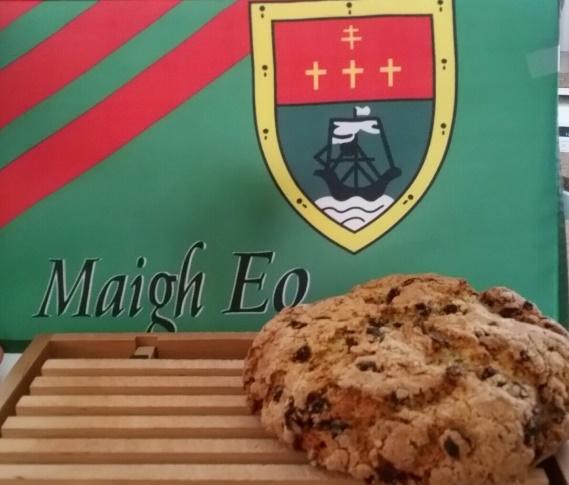
Irish soda bread and Mayo flag
Part of the fun in telling our family stories is sharing the recipes we cherish that bring us comfort and fond memories of our homes. My family and my husband’s both came from Ireland and at this time of year, I like to bake Irish soda bread as we celebrate St. Patrick’s Day. Especially now, as many of us are staying in to stay healthy, I thought it would be fun to share this recipe–a way to connect and something to try now that we have more time on our hands.

Now, having traveled in Ireland, I can tell you that there are as many soda bread recipes as there are townlands. This recipe has its roots in County Cork. My mother-in-law was the family historian and genealogist, and she both visited Ireland and stayed in touch with friends and relatives in Inchigeelagh, her father’s home, and Coolclogher, her grandmother’s birthplace.

Here’s the recipe for Mary Kearney Murphy’s Irish Soda BreadSlainté (to your health)!
 

Ingredients:
4 cups flour
1 Tbsp. baking soda
3 Tbsp. sugar
2 ½ tsp. salt
3 Tbsp. shortening
½ tsp. cream of tartar
1 ½ c. buttermilk
1 ½ cup raisins
2 Tbsp. caraway seeds

Preheat oven to 375 degrees F.
Combine dry ingredients, except raisins and caraway seeds. Cut in shortening. Add buttermilk, raisins, and caraway seeds. Mix well and knead on a floured board until smooth. Shape dough into a ball. Place on a buttered cookie sheet and flatten into a 7-inch circle. Cut a cross in the top with a floured knife. Bake 30-40 minutes. Cool completely before cutting.

Optional: Melt 1 Tbsp. butter and brush on top of loaf as soon as you take it from the oven. (I do not do this.)

If you have a favorite family recipe and a memory to go with it, why not share it? Email blog editor Jennifer Dix: jdix@californiaancestors.org

Copyright © 2020 by California Genealogical Society

13 March 2020

Now's Your Chance

CGS member Chris Pattillo writes:

For all our CGS members now is your chance to focus on that brick wall or organizing project that you’ve been putting off. What else are you going to do now that all the fun things you’ve planned are being canceled or postponed because of the coronavirus?

No more excuses that you don’t have time. Suddenly, time has been freed up. This may be a once-in-a-lifetime opportunity. As you cross out plans on your calendar because they’ve been canceled replace those notes with "Work on My Family History," or "Tackle That Brick Wall," or "Start Writing Now!"

Maybe you’ve been putting off a big organization project or avoiding facing a massive pile of filing. What about scanning all those photos? Well, now you have chucks of free time–the perfect time to tackle one of those boulders.


Above is a photo of my paternal grandmother Anna from the time when she lived with her older sister Kate in Rhyolite, Nevada. This is one of three photos that I described in detail on my family history blog for her biography.

Do you really want to start writing your family’s story but just don’t know how to start? Well, here is an idea–one that I’d planned to introduce during my blogging class that was scheduled for March 28 at the CGS Library but has now been postponed indefinitely. If you don’t think you can write, try this and see what happens: Find or buy some kind of audio recorder–I use an Olympus Digital Voice Recorder but a smart phone that takes voice messages will work. Even an old-fashioned reel-to-reel or a cassette recorder will work. Next find some old photos that show the person, family or event that you want to write about. Then pretend you are talking to someone from a future generation who will be thrilled to find what you wrote when they find it fifty years in the future. Turn on the recording device and simply describe what is in the photo. Tell a story about that person and some of the little things that you remember about them, or your parents or grandparents told you about them.

Here is another photo from the same time period. I used these to write about the individuals, and the setting-what the landscape looked like. I described the house in detail and even estimated its dimensions to explain how small the house was. I also pointed out the pet dog that appears in both photos.
Lots of people say they can’t write but I’ve never met anyone who said they can’t talk. So just talk normally and describe the person or event. Then play the recording back and type it up. That’s it, you’ve started writing your family history. Keep going–why not, what else have you got to do with all your free time? Oh, and forget about cleaning the garage.


Copyright © 2020 by California Genealogical Society

07 March 2020

COVID-19 announcement: CGS Library closed through March 28

Because of the uncertainty surrounding the spread of the novel coronavirus, we have decided to close the CGS Library until March 28. We prefer to exercise an abundance of caution rather than to potentially expose our volunteers and patrons to infection. At this time, classes held at the Oakland Family Search Library are not affected. We will refund all fees paid for canceled classes.

Given that this is a rapidly evolving situation, we will re-evaluate the state of affairs in two weeks.

For up-to-date information on COVID-19, it is recommended you consult one of the following websites:

Copyright © 2020 by California Genealogical Society

06 March 2020

Mountain View Cemetery Events - A Tour for Every Season

CGS members can join our "Naughty and Notorious Tour" of Mountain View Cemetery on March 21. You may not know, however, that this famed, park-like cemetery of 226 acres in North Oakland also offers free tours every second and fourth Saturday.

We just missed a Black History Tour that happened on February 22 but it is an annual event, so mark your calendar for next year.
One of the spectacular floral displays from a previous Tulip Festival

The weekend of March 27-29 is the 14th Annual Tulip Exhibit, which features spectacular floral arrangements created by Bay Area florists, garden clubs, and local college floral design classes. On March 28, Jane Leroe and Michael Colbruno will lead a tour for Women’s History Month, highlighting the lives of influential women such as Julia Morgan, Ina Coolbrith, and Anna Head.

April is when the cemetery hosts the Ching Ming Festival (remembrance of ancestors). This year, it is held April 4-5. On April 25, docent Chris Pattillo, a CGS board member, will lead a tour exploring the Trees of Mountain View Cemetery. 
Deodar Cedar at the Miller pyramid tomb on Millionaire's Row
at Mountain View
Local historian Dennis Evanosky gives a great tour following the Memorial Day Commemoration at the Civil War Plot on May 25. Jack London’s father is buried in the plot, as is Obediah Summers – an African American who served during the war. This tour starts after the commemoration event, at about 11 a.m.
Obediah Summers is buried in the Civil War Plot
Dennis also leads a June 27 tour about the California Gold Rush and Railroad.

This is just a smattering of the Mountain View offerings in 2020; other events include concerts, seasonal festivals, and more. Tours usually start at 10 a.m. and run about two hours. Plan to meet at the office just inside the cemetery gate. For complete details, visit their website: https://www.mountainviewcemetery.org/

Copyright © 2020 by California Genealogical Society

05 March 2020

"Paper Sons and Picture Brides" in NGS Magazine


Exciting news! The cover of the newly published January-March issue of NGS Magazine features an article by CGS members Grant Din and Linda Okazaki. "Paper Sons and Picture Brides" is an in-depth look at Record Group 85 found at the National Archives in San Francisco. This group of records, titled "Immigration Arrival Investigation Case Files, 1884-1944," contains information about immigrants to California during the late 19th and early 20th centuries. It is a particularly rich source for those researching their Chinese and Japanese ancestors, who often had to employ strategy to enter the U.S. at a time of heightened anti-Asian sentiment. Many prominent Asian Americans, from architect I. M. Pei to Congressman Norman Mineta, trace their ancestry to these early immigrants.

Beautifully illustrated with photographs and documents, Din's and Okazaki's article offers a broad historical overview that gives context to these documents. It also has a sidebar explaining how the activism of a group of genealogists and historians saved these files from destruction. The article includes anecdotes that show the sometimes grueling experience of Asian immigrants: an eight-year-old Chinese boy was grilled with more than 100 questions, including details of his village, house, school and neighbors, before he was allowed to join his father; a teenaged American citizen was detained for ten days upon returning to the U.S. from Japan. Din and Okazaki offer detailed information on how to access and interpret the files.

National Genealogical Society members can view the magazine online at the NGS website: https://www.ngsgenealogy.org/

Copyright © 2020 by California Genealogical Society
01 March 2020

March 2020 Events and Classes

Happy March! It's the month when we celebrate St. Patrick's Day, Women's History Month, and spring officially arrives on March 19 (a tad early this year). We have a lot of fun and educational events and classes coming up. If you see something that interests you and you haven't yet registered, please sign up!

Here's what's on tap this month:

March 18-April 8: Building Skills for Successful Family History Research, a four-week series taught by Pamela Brett, kicks off March 18 at the Oakland Family History Center. She shares "skills acquired from many years of beginner's mistakes." This is a great opportunity to tune up and sharpen your research skills with an experienced guide and fellow classmates.

Other happenings:

March 15: The Fifth Annual Irish Ancestry Network Meetup is a fun opportunity to network with others researching their Irish ancestors. Includes socializing, potluck lunch, and speakers TBA.

March 21: "The Naughty and Notorious Tour" of Mountain View Cemetery, led by docent Michael Colbruno. A special treat for CGS members.

Also March 21: West Coast Immigration in the 20th Century, a talk by Linda Okazaki, examines the ports of entry and the experiences of immigrants to the West Coast, many of them Asians, in the last century.

March 28: "Blogging to Share Your Family History" Chris Pattillo offers tips "for writers and non-writers" about starting your own genealogy blog.

Don't forget our monthly First Saturday "Intro to Genealogy" class, and our various Special Interest Groups!
All our events can be found listed on our website
Or at the CGS Facebook page
Or at EventBrite.com (search for "California Genealogical Society")


Copyright © 2020 by California Genealogical Society

24 February 2020

Results of the CGS Member Survey

image: Eventbrite

Late in the fall of 2019, we emailed a 26-question survey to our 880 members. We received 202 responses! Here are some of the things you told us:

Nearly half (47.8%) of the respondents rated their own genealogy skill level as Intermediate, while 20% rated themselves as Advanced, and 25% as Beginners. Two percent of the respondents were Certified Genealogists. About 75% said they belong to or participate in other genealogical societies, or regularly visit other libraries and archives.

We’re happy to know that 88% of respondents think CGS is offering classes that are of interest to them. Leading topics of interest were DNA (genetic genealogy), methodology, and technology, with a number who appreciated classes on particular countries or ethnic or geographical groups. Related to this were requests that the CGS Library carry more books on particular countries: at the top of the list was Britain, followed closely by Ireland, then Germany and related regions (such as Prussia and Pomerania). There also was considerable interest in Scotland, Canada, France, Italy, and the Baltic states.

Librarian Arlene Miles welcomes suggestions for new books
you'd like to see in the CGS library


Regarding the requests for books, CGS Librarian Arlene Miles would love to know what specific titles you’d like to see in the library. Please email her at amiles@californiaancestors.org.

While 63% of you feel it is very important that the society maintains its own library, slightly more than half (54%) would like more events to be held in different venues. The reasons for this varied, although many members live far enough from downtown Oakland that it is difficult for them to visit.

Many (68%) of you have a strong interest in seeing CGS offer online classes, live webinars, or posting recorded classes online. Our 2020 goal is to recruit volunteers with the necessary technical skills to set up and oversee this kind of a program.

We appreciate the feedback. CGS is continually striving to engage members by being responsive to their interests. The newly redesigned website includes a link where you can send us any comments or feedback on our programs and your needs.

Copyright © 2020 by California Genealogical Society

20 February 2020

Nichi Bei "Films of Remembrance," February 22 & 23

https://www.filmsofremembrance.org/


In the Japanese American community, February 19 is an annual "Day of Remembrance," marking the date in 1942 when President Franklin Roosevelt isssued Executive Order 9066, clearing the way for approximately 112,000 men, women, and children of Japanese ancestry to be evicted from their homes on the West Coast and held in American concentration camps and other confinement sites across the country. This weekend, the Nichi Bei Foundation hosts its 9th annual "Films of Remembrance," showcases of films commemorating the World War II incarceration of Japanese Americans. On Saturday, the festival screens in San Francisco's Japantown; the program repeats in San Jose on Sunday.

The San Francisco Chronicle offers an overview of the film festival. It includes 11 short films, discussion with filmmakers, local news personalities, a multimedia concert, and more.

The full schedule of events can be seen here.

Copyright © 2020 by California Genealogical Society

10 February 2020

New Website Launched

The CGS Website Development Team has launched the new CGS website, with a new look and several new user-friendly features. Here is what you will see the next time you visit the site.


The menu bar across the top should be familiar. You can use the pull-down menus to access the content you are used to finding on our website. The SEARCH box at the top right has been improved to search our entire site–much more than it used to. Members can also LOGIN from the top menu bar.

We are pleased to  prominently feature several ancestor photos on the new website home page. To see more ancestor photos, just click on any of these images; that will take you to the Members’ Ancestors photos page, where you can hover over an image to see the name of the person and/or who submitted it.

To the right of the three Ancestor Photos you will see a list of upcoming events. These will be updated regularly. You can scroll through the list and click on an image to go to the Eventbrite listing where you can register for an upcoming event.


Just below the photos you will see three large boxes: CLASSES & EVENTS, VISIT OUR LIBRARY, and SPECIAL INTEREST GROUPS, each with a short description and links to the pages where you can read more details. Below that are three more large boxes.


From here you can view photos of CGS PAST EVENTS, go directly to the BLOG, or DISCOVER what’s new in downtown Oakland near our library, including a list of places to eat within one block.

Beneath that are three small GOLD boxes that link to CGS videos, let you sign up for our free E-news, or hire a researcher.

There is lots more, including some new features at the bottom of the home page. The SHOP page has been expanded to include the swag items that are for sale at the library. SUPPORT CGS/DONATE is new and explains different the ways you can help our society thrive. LEAVE US A SUGGESTION is also new. Feel free to make comments about the new website or any other topic. Your suggestions will go directly to the website team and be addressed. You will also find a link to our entire CALENDAR at the lower left. 

You should find that the new site works much better than the old site did on phones. To report technical problems with the website look for the message at the very bottom and click on the link to the Webmaster. Also, note that in the lower right corner there is a link to our Sitemap. Clicking on this link will show you an outline of everything that is on the site.


The website team has worked very hard to complete this update. We thank everyone who has reviewed our content and offered suggestions and ideas for improvement. We hope you find what you are looking for easily and like the new look. 

Copyright © 2020 by California Genealogical Society

06 February 2020

Chinese American Pilgrimage in Historic Marysville, February 22 and 23


Photo by Jay Nixon - copyright Bok Kai Festival
The Chinese American Pioneer Heritage Committee hosts its third annual Chinese American pilgrimage to coincide with the Marysville Bok Kai Parade and Festival, celebrating the Lunar New Year on the weekend of February 22 and 23. The weekend’s activities include in-depth panels, activities, and exhibits on Chinese American culture, history, and genealogy.


The historic town of Marysville, in Yuba County, was at one time home to the second largest Chinatown in the United States. It was a hub for Chinese Americans who built the infrastructure of California—railroads, roads, wineries, mines, delta levees, water and irrigation systems and agricultural farmlands. The town’s Bok Kai Temple, founded in 1854 by Chinese migrants who came to work in the gold mines, is the oldest continuously operating Taoist Temple in the country, and the annual Marysville Bok Kai Parade and Festival, celebrating its 140th anniversary this year, is the longest continuously held parade in California. 


This year’s theme is “Lost Chinatowns,” remembering the nearly 100 communities destroyed because of anti-Chinese laws, racial violence, and economic displacement. “Join us as we rediscover the lost Chinese American communities of Pacific Grove/ Monterey, San Jose, and Stockton,” say the organizers.  Two days of extended cultural programming include a Chinese American Documentary Film Festival, walking tours of the historic old Chinatown, demonstrations of early Chinese immigrant cooking, historic photo exhibits, musical and theatrical performances.  The historic Bok Kai Temple, Old Chinese School Museum and Chinese American Museum of Northern California are all open to visitors this weekend. A Saturday Pioneer Dinner honors and networks with community leaders and activists.


Sunday is a full day of history panels and workshops. Organizers discuss the sharing and recording of family stories, genealogical research, historical memory, and community history.  Learn about the exciting work being done to digitally recreate our historic communities and change the face of how public history is done. Historian David Lei will display a multimedia digital mapping of 1905 San Francisco Chinatown.  University of the Pacific history professor Jennifer Helgren and her team demonstrate their virtual reality recreation of Stockton’s “Little Manila.” Brian Tom shares the history of the Chinese American Marysville pioneer families and descendants. There is a screening of Felicia Lowe’s award-winning documentary, “Chinese Couplets,” which explores the impact that the Chinese Exclusion Act had on her family. The day concludes with the traditional firing of the bombs and the chance to catch a “good fortune” ring at the Bomb Day festivities.


Special hotel rates are available in nearby Yuba City and Wheatland. For complete details, see the Eventbrite listing.


Copyright © 2020 by California Genealogical Society

30 January 2020

Update: USCIS comment period extended to February 10

You may have heard that U.S. Customs and Immigration Services (USCIS) is proposing to exponentially increase fees for retrieval of their genealogy records. In some cases this would mean raising costs as much as 500 percent. We wrote about this previously in our blog. USCIS is the repository for most immigration and naturalization records from the late 19th to the mid-20th century. The proposal has drawn protests from historians and genealogists and even from some Congressional members, most notably Senator Mitt Romney

Alien Registration File for Raymond Hiroshi Hirai, Alien Registration #A1740872,
Records of the United States Citizenship and Immigration Services.
Photo courtesy of Rina Hirai.

The deadline to submit public comments on the issue was originally December 2019. Now USCIS has extended the deadline for public comments to February 10, 2020. The folks at Records, Not Revenue recently announced the extension of the deadline and offered the following advice:

"We have four steps for you to take right now to help us oppose the fee hike:
1) If you haven't yet submitted a comment, please do so. All the information you need to know is at http://recordsnotrevenue.com/. Submit your comments at: https://www.regulations.gov/document?D=USCIS-2019-0010-10938

2) Once you have submitted a comment, or if you have already done so in the past, please make sure you write your Senators and Representative! We have received interest from several Congressional offices, and hope this two-week extension can gain us some further interest.

3) If you have submitted a comment AND written your Senators and Representative, you are welcome to submit supplementary comments! There is no need to submit repeat or duplicative comments. If your comment has not yet posted to the online portal, but you received email confirmation and/or a receipt number from your previous comment, there is no need to submit the same comment again. However, you are welcome to add additional thoughts to your previous comments; just be sure to include reference to your previous comment in your supplementary comment.

4) Share share share! Make sure your spouse and your siblings and your parents, cousins, neighbors all submit a comment, too. About 20% of the current posted comments are about the Genealogy Program - and that takes up just 2 pages of the 92-page proposed rule. Every single comment matters. Download the one-pager from our website for an easily shareable document.

As always, let us know if you have questions, if you hear anything from your elected officials, or if we can help in any way."
________

CGS has made a formal statement of opposition to the proposed fee increase. Board members Linda Okazaki and Grant Din are our representatives with the committee. If you haven't yet weighed in on the issue, this is your chance!

Copyright © 2019 by California Genealogical Society

27 January 2020

CGS Member Perks: A Visit to the Oakland Library History Room

Photos by Kathy Ikeda and Jennifer Dix

Librarian Dorothy Lazard in the Oakland History Room

One of the many perks that come with being a member of the California Genealogical Society is getting to go on special members-only outings every year. On January 23, a group of us got a close-up look at the Oakland Public Library’s historical and genealogical holdings. The delightful Dorothy Lazard, principal librarian at the Oakland History Room, gave us an introduction to the library’s rich trove of books and artifacts.

The History Room holds numerous documents that could prove invaluable for local genealogical research. These include bound volumes of Oakland birth and death certificates from 1870 to 1904, records of the West Oakland Home orphanage, Oakland Police arrest records from 1877 to 1912, indexes to vital records and cemeteries in several other counties, numerous old photos, and much more. For details, check out the old-fashioned card catalog, housed in good old wooden storage drawers (the library catalog is also online).

The library has some very detailed resources for property research in the Map Room. Dorothy passed around the oversized “Block Books,” tax assessment records showing owners’ names block by block. They also have a finely detailed Sanborn Fire Insurance Map, which showed the footprint of buildings and recorded physical details such as building material, number of floors, whether it has a basement, etc. Dorothy showed us that by backlighting pages, you may detect previous structures that were pasted over during later surveys.

Looking at the Sanborn Fire Insurance Map in the Map Room
Dorothy demonstrates how backlighting may reveal
earlier elements of the map

Dorothy gave us a brief overview of Oakland’s history. West Oakland is the original core of the city that was incorporated as Oakland in 1854. It grew quickly over the next half century and by 1909 was the second largest city in California. We got a rundown on the origins of the annexed districts: for example, Brooklyn was originally settled by Mormons and named for the ship that brought the settlers from New York in 1854; the San Antonio neighborhood takes its name from the old Peralta family ranch. The glass display case in the History Room is used for rotating exhibits. Currently it showcases Oakland’s final annexation in 1909, when the city came to encompass Claremont, Fruitvale, Dimond, Fitchburg, Beulah, Melrose and Elmhurst districts.

While only a fraction of the library's historical collection is available online, there's still a lot to see. Go to the library's home page and click on "Oakland History Online" to start exploring. Our thanks to Dorothy Lazard for the wonderful tour and to Jane Lindsey for organizing the event. Our next two outings are coming up soon! Click on the names below for more information:

Feb. 25: Field Trip to the California Historical Society


All smiles after an informative and enjoyable visit!


Copyright © 2020 by California Genealogical Society

25 January 2020

February Classes and Events


No Valentine-themed events this month, but we're still sure you'll LOVE our selection of lectures, classes, and other events. 

We start off with our FREE "Intro to Genealogy" class, Saturday, February 1. This month, Dick Rees gives tips on "Using the Census."

Then it's on to more adventures:

Pam Brett discusses how a well-planned on-site research trip will increase your chances of answering your most perplexing research questions and enhance understanding of the lives of your ancestors. 
Lisa Gorrell kicks off her popular five-week course for those ready to go beyond vital records and the census. This intermediate class will focus on court records, church records, emigration/immigration and naturalization, land and property records, and demonstrate how to find these records both on and off line.

Ron Madson leads a hands-on photo scanning class using a PC or MAC to assist you in scanning documents for use with genealogical projects. 
(CGS members only) CHS reference and outreach librarian Frances Kaplan will describe the Society's diverse holdings and share selected materials for our perusal. 

AND: Planning ahead? You can still register for our May trip to the Family History Library in Salt Lake City!

Don't forget our Special Interest Groups!
All our events can be found listed on our website
Or at the CGS Facebook page
Or at EventBrite.com (search for "California Genealogical Society")


Copyright © 2020 by California Genealogical Society

14 January 2020

Report from the Annual Membership Meeting: New Board Members and More

We held our Annual Membership Meeting last Saturday, January 11, and were happy to see a good turnout for the election of Board members and reports from our various committees. Among the items covered were the new website, soon to be launched; the Society's current financial health; and upcoming events and classes.

President Jim Sorenson made some short remarks and noted that while we here in Oakland often refer to the California Genealogical Society "and Library," our organization's legal name has been and remains simply the California Genealogical Society for business purposes.

We thanked Past President Vicky Kolakowski for her service, and gratitude was also extended to departing Board members Felicia Addison and Nancy Cork. Then membership voted in the new slate of nominees: Jim Sorenson, who has been serving as interim President since July, was confirmed as the new Board President, and Maureen Hanlon as Vice President. We also confirmed three new nominees to the Board. Meet Grant Din, Theresa Murphy, and Joanna Shear:

Grant Din
Grant Din has been interested in genealogy ever since a cousin told him forty years ago that he was in the 36th generation of Gongs! Since that time, he has researched his and many families' immigration histories, including when he was on the staff of the Angel Island Immigration Station Foundation. He has worked in the Bay Area nonprofit sector his entire adult life. He completed Boston University's Certificate Program in Genealogical Research in 2015 and enjoyed being a part of the team that researched the six Chinese seamen who survived the Titanic for the film "The Six."

Theresa Murphy
 Theresa Murphy has been researching her ancestry since 2016 when she traveled to Ireland to visit her family's homelands and meet newly found cousins. She has been a member of CGS since 2018. Since joining CGS, she expanded her research to her New England ancestry with the help of one of our members. Theresa is a native of Oakland and spent her professional career as a CPA in auditing, consulting, and systems implementationsskills which have proven invaluable in genealogy research. She is currently serving on the Website Committee, assisting in the development of our new website, and is teaching a workshop on creating a family history book.

Joanna Shear
 Joanna Shear joins the Board Officers as Corresponding Secretary. She was born in Boston, grew up in Missouri, and landed in the Bay Area 21 years ago. A member of CGS since 2016, she has a BS in physics from Indiana University, an MSE in industrial engineering from Georgia Tech, and has completed Boston University's Certificate Program in Genealogical Research. She was first drawn to genealogy by an unknown name on a mysterious engraved silver chalice, which led to a reunion for family separated by the Holocaust. Eleven years down the road, she is deep into the history of her Jewish ancestors as they moved within Europe and emigrated to other continents. She now also uses DNA to go beyond the documentation and trace new family connections. As her research for family and others has grown into new areas, so has her dedication to making genealogy open and accessible to all.

We're very excited to have Grant, Theresa, and Joanna on the Board. We know they will bring new perspectives and skills to further advance the Society.

The meeting was followed by a delicious potluck and celebratory cake (thank you, Kathleen Beitiks!), and then several CGS members shared their family memory booksand in one case, a large full-color family tree poster. Chris Pattillo stood by with a watchful eye on her phone timer, making sure presentations were kept to three minutes, and a good time was had by all.


Copyright © 2020 by California Genealogical Society