California Genealogical Society: Blog

Recent Posts

15 June 2009

What You (and I) Missed: Morse and Morse on DNA

CGS membership meetings are held every other month in January, March, May, July, September and November but this month we had a special presentation by Steve Morse and his daughter Megan Morse on DNA on Saturday, June 13, 2009.


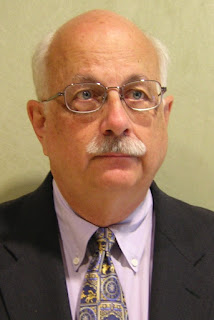
Steve Morse

We had a record turn-out (56!) which meant that I gave up my seat. Fortunately, two of my fellow genealogy bloggers were on hand – Craig Manson of Geneablogie and Steve Danko of Steve's Genealogy Blog. Steve has written up an excellent summary of the talks on his blog: Morse and Morse on DNA.


Megan Morse

I did sneak in to take a couple of photos, including this one of Petunia the opossum.


Petunia the opossum


We also took a minute to get a photograph together. (Thanks to Steve Harris for acting as photographer.)


Steve Danko, Craig Manson and Kathryn Doyle

Photographs by Kathryn Doyle and Steve Harris, 6/13/2009, Oakland, California.

12 June 2009

Member Spotlight: Marston Watson

One of the speakers at the upcoming Southern California Genealogical Society Jamboree is CGS member Marston Watson who will be presenting "Internet Research: Joys and Pitfalls."
Watson comes from a long line of genealogists and was introduced to the pastime as a very young child when his father created a typewritten genealogy from the hand written notes and pedigree charts of Marston's grandfather and developed a clever way to reveal the next pedigree chart by cutting rectangular bars on each page with a razor blade.

But it wasn't until 1991 when he noticed one of the names on his chart in a book by Frederick Weis, Ancestral Roots of Certain American Colonists that he was hooked on genealogy forever. He learned about his royal ancestor, Governor Thomas Dudley and began recording his ancestor’s data on an early version of Roots III. Today he uses TMG and his genealogy has grown from about 300 names to over 30,000, including six more royal lines.

His thirst for uncovering his family genealogy led to the discovery of Mayflower lines, colonial physicians, colonial governors, sixteen more Revolutionary War ancestors, and participants in the colonial wars. Each of these discoveries led to his acceptance in the related hereditary societies.

A member of the Sons of the American Revolution since 1967 and past president of the San Francisco Chapter, Watson was one of six compatriots to receive the prestigious Minuteman Award at the NSSAR Congress on Monday evening, July 6 in Atlanta, Georgia. It it their hightest honor and no more than six candidates are selected each year among 28,000 members.

His SAR California membership of nearly forty-two years includes his election as Oakland Chapter (now Thomas Jefferson Chapter) president and state secretary in 1968, state vice president in 1969 and state president in 1970.

Marston and wife Kathy joined the California Genealogical Society in 1993 and have been desk duty volunteers at CGS for many years. Kathy currently also serves on the computer and website committees. They are very much involved at the national level of the Military Order of the Loyal Legion as co-editors of the Journal. They have both been invested into the Sovereign Military Order of the Temple of Jerusalem and traveled to the Holy Land in November, 2007. He is the Grand Editeur of the national journal and she is the Grand Webmaster for the Order.

A native of Cambridge, Massachusetts, Watson spent his youth there and in Houston, Texas and completed his last two years of high school in Burlingame, California. He received his bachelor degree from the University of California at Berkeley.

He was a freelance writer for eighteen years with the Contra Costa Times and was a columnist there for eight years on the subject of job search. Marston has contributed articles to a number of national genealogical publications including The New England Historical and Genealogical Register, Mayflower Descendant and SAR Magazine. He has written several books on royal ancestry and other genealogical volumes.

10 June 2009

Wordless Wednesday

Wordless Wednesday
First Saturday Free - June 6, 2009
Introduction to Genealogy Class with Lavinia Schwarz


Photographs courtesy of Tim Cox.

08 June 2009

Member Book: The Tricking of Freya by Christina Sunley

Read any good fiction lately? How about some with a genealogy theme?

A few years ago, genealogist-extraordinare Megan Smolenyak Smolenyak wrote a series of articles for the 24/7 Family History blog about her pursuit of mysteries, cozies and other books with a genealogical theme. I haven't yet cozied up to any of Megan's suggestions and lately it seems that everything I read is on a computer (or iPhone) screen but all that may change this week.

On Thursday night I'll be heading to my favorite neighborhood bookstore to meet a new CGS member. Author Christina Sunley will be reading from her first novel, The Tricking of Freya, at A Great Good Place For Books.

What is her novel about? I hope Christina doesn't mind if I let her tell us in her own words. (You can read more at her blog.)

It’s about a young woman obsessed with unraveling a family secret that takes her all the way to Iceland.

It’s about turning your back on the past, then discovering years later that you can’t move forward in life without coming to terms with your own history.

It’s about forgiving the very family members who have hurt you most deeply.

It’s about being influenced by ancestors who died long before you were born.

It’s about writing your way to redemption.


Christina Sunley
The Tricking of Freya

Thursday, June 11, 2009
7:00 p.m.

A Great Good Place For Books
6120 LaSalle Avenue
Oakland, CA 94611

05 June 2009

A-Files Update

On Wednesday, June 3, 2009, the United States Citizenship and Immigration Services USCIS and the National Archives and Records Administration NARA held a formal joint signing ceremony in Washington, D.C. to "designate as permanent the immigration files created on the millions of aliens residing in the United States in 1944, as well as those arriving since then." The NARA press lease described the significance:

These Alien Case Files (commonly referred to as A-Files) document the famous, the infamous, the anonymous and the well-known, and are an historical and genealogical goldmine. The new agreement authorizes the U.S. Citizenship and Immigration Services/Department of Homeland Security to send A-files to the National Archives when 100 years have passed since the birthdate of the subject of a file. The National Archives expects to receive the first transfer of A-files later this year, and will store the files at National Archives facilities in San Francisco and Kansas City. Researchers will be able to access the files at these two sites, or request copies of files. An index will be available to support research use.
CGS member Jeanie W. Chooey Low has been a tireless advocate for the A-Files and active member of "Save Our National Archives" SONA, an ad hoc group formed in 1998 when the Regional NARA were threatened with closure. Jeanie was concerned that the recent publicity, including the USA Today article, made no mention of SONA's ten years of advocacy nor the major contribution of the late Congressman Tom Lantos, California. She sent this:

After ten years of SONA (Save OUR National Archives) advocating to the USCIS and NARA to schedule the accessioning of the Alien Files (A-Files), those two agencies now have an agreement to transfer custody of these invaluable immigration case files from USCIS to NARA. Then too, a major victory was gained by the NARA agreeing that for all time the Alien-Files in the Pacific Region would be allowed to remain at the NARA Leo Ryan Building in San Bruno, CA.

It is the only part of the A-Files in the nation to have "escaped" consolidation to Missouri, and instead be retained as a permanent collection of the Pacific Region National Archives as a local Bay Area treasure.

ACCESSIONING of the ALIEN FILES
Under the Alien Registration Act of 1940, all aliens in the United States were required to register with the Immigration and Naturalization Service (now known as the USCIS, U.S. Citizenship and Immigration Service). The Alien Registration Files (A-files) are the detailed evidentiary records collected for each of these registered individuals. The contents within these files may include photographs, birth and marriage certificates, visas, employment records, transcripts of testimony, personal artifacts, and other important biographical and historical information.

Although the A-files were first started in the 1940s, some of the A-files contain much older information that was collected and consolidated from earlier entries back and forth through ports of entry into America. For example, the immigration records (e.g. like those from the Chinese Exclusion Act era) that are currently available for public research and viewing at NARA, San Bruno (known as Record Group 85 case files) go as far back as the late 1800s.

The A-files stored at San Bruno are a valuable collection of historic immigration records from the Port of San Francisco, Honolulu, Nevada and Northwest. These A-files not only include records of Chinese immigrants during the Chinese Exclusion period, but also records of such people as German, Italian, and Japanese WW II alien internees; Holocaust survivors; Filipino Freedom Fighters; WWII “war brides”; immigrants from many different regions of Eastern Europe and the Pacific Islands.

In 1998, USCIS began consolidating all of its A-files at a non-research NARA facility in Lee’s Summit, Missouri. At that time a group of educational institutions, researchers, history and genealogical organizations, non-profit organizations, and individuals got together to form SONA (Save OUR National Archives). Their original goal was to prevent the closure of local NARA facilities but it was transformed into a coalition to make sure that the non-current A-files are transferred from the authority of USCIS to NARA so that they can be permanently preserved and made accessible to the public by database. 
For the past 10 years, SONA, under the leadership of former Congressman Tom Lantos (previously representing San Mateo) and others, were able to demand the A-files be stored at San Bruno and never move to Lee’s Summit. Indeed, USCIS has admitted the Pacific Region A-Files are the “lone exception” being the only A-Files that have not been moved to Missouri. However, since the A-files are still under the authority of USCIS, they are not viewable without submission of a formal Freedom of Information Act (FOIA) request and are subject to possible censure to protect the privacy and/or government sensitivities as determined by USCIS officials.

What is so significant about the accessioning of the A-Files from USCIS to NARA is to make them part of the nation's permanent historic records and guarantee their availability to the public for all time. Government documents are not automatically preserved.

When a government agency such as USCIS normally retires its older documents, NARA must evaluate these records for their historical value before they can be considered for inclusion in NARA’s permanent collection. Approximately 98% of all the records produced by our national government are not preserved by NARA and the A-files were among those originally designated for destruction.

Thus, after 10 years of constant community clamor and support from a wide range of organizations as diverse and far as Australia, the two agencies have finally come to an agreement for the Alien Files to transfer from USCIS to NARA for protection and preservation for future generations of scholars, researchers and family genealogists of many nationalities.