California Genealogical Society: Blog

Recent Posts

29 July 2020

New Resources On The CGS Website

Chris Pattillo is a CGS Board member and oversaw the development of the CGS Strategic Plan.

New resources have been added to the CGS website! During the interviews for the CGS Strategic Plan one oft-made suggestion was the need to add more resources to the website. Well, we heard you and are happy to announce that Part One has been accomplished and is ready for you to explore.


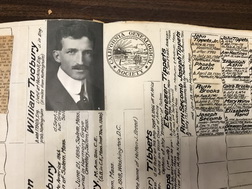
The Website Content Committee started by identifying resources held in our library that will be of interest to our members. We then ranked those suggestions and dove in. Committee member Stewart Traiman scanned two volumes of lineage charts that were created by CGS members between 1955 and 1957. Then our volunteer coordinator, Kathleen Beitiks, mobilized a team of volunteers to index the names that appear on those charts.

The team has finished indexing all of the 65 charts in volume 3.1.

two red book spines
These two volumes of lineage charts were
created between 1955-1957

handwritten pedigree
All 135 lineage charts have been scanned and 
over half have been indexed so far.


Committee member Theresa Murphy checked each chart for completeness and accuracy, and committee member John Ralls added links to each tree and has put the material on our website. You will find a link to these new records on the home page. You need to first Log-In as a member. The SEARCH button will take you to our Databases page where you should select the link labeled "Lineage Chart Images".


We invite members to use this new database and welcome feedback. You can use the SUGGESTIONS tab on the bottom left side of the website to submit comments or suggestions.


Much More To Come


Volunteers are working on indexing 70 additional lineage charts in Volume 3.2. As soon as that work is complete, we will add it to our website. We have also made excellent progress on two volumes of Pedigree Charts that were created in the early 1900s, which Ron Madson is photographing. We are looking into adding the Ahnentafel Charts that were done by CGS members in 1921 and 1944.


Other projects that are being considered include:


·       A set of birth records from the San Francisco Archdiocese that was compiled by CGS member Anne Robinson


·       Thirty biographies of signers of the original California Constitution that were researched and written by CGS member Wayne Sheppard


·       Records from our manuscripts collection


We are also looking to add more culturally diverse records to our collection.


If you would like to get involved with any of these projects please contact me at cpattillo@californiaancestors.org or Kathleen Beitiks at kbeitiks@californiaancestors.org

Copyright © 2020 by California Genealogical Society

24 July 2020

Online genealogy, week of July 27-August 2


Here is a list of online genealogy events for the coming week. Most are free. See our post "Genealogy Learning in the Time of Coronavirus" for links to archived classes available at Ancestry, FamilySearch, RootsTech, and more.

August 1: Be sure to check out the CGS workshop "Rules for Entering Family History Data" with Russ Worthington (fee)

Registration opens July 31 for this series of prerecorded webinars and live chats

To register for one of the events below, click on the name of the host organization.

American Ancestors
July 28: "Jewish Women in the Labor Movement" by Judith Rosenbaum

July 29: FamilySearch Q&A with Kathryn Grant

July 28: "Where There's a Will, There's a Probate: U.S. Probate Records"

July 28: "Fabulous Photo Discoveries at MyHeritage" by Lisa Louise Cooke
July 29: "Researching a Loyalist Soldier" by Craig R. Scott

Densho.org continues its series on "Finding Your Nikkei Roots"
July 29: "Family History Records in Japan"

August 1: "Cousin Baiting and Cousin Stalking" by Christine Cohen

Conference Keeper has a large calendar of events (too many to list) hosted by various genealogical organizations. New events are added often, so check back frequently.
Here are a few of the coming week's highlights:
July 28: "Resources on AmericanAncestors.org" by Christine Cohen
July 28: "Jewish History and Genealogy" (panel discussion)
July 30: "African and Jamaican Roots: Who Do You Think You Are?" by Paul Crooks
July 31: "Tracing Black Ancestry: Secrets of the 1817 Slave Registers" by Paul Crooks
August 1: "The Psychology of Searching" and "Ethical Dilemmas in Genealogy" by Penny Walters
August 2: "Mixing DNA with a Paper Trail" by Penny Walters

Be well, stay safe, and happy learning!

Copyright © 2020 by California Genealogical Society

22 July 2020

Quarantine Quests: The joy of indexing!

Two volumes of pedigree charts
created in the 1890s
This Quarantine Quests story is from Jean Alderson and the other CGS volunteers who are indexing four volumes of Pedigree and Lineage charts for our website.

CGS has a fabulous team of volunteers who have responded to an invitation to help index the names of individuals listed in four volumes of Pedigree and Lineage Charts. The Lineage Charts were prepared in the 1950s and the Pedigree Charts are much older, having been done shortly after the society was founded in 1896. So far, eight CGS members have indexed all the lineage charts in volume 3.1. They, plus seven additional volunteers, have also gotten involved indexing the pedigree charts.

Jean Alderson was the first to volunteer and she is our star indexer. Of the 63 lineage charts, Jean has indexed 37–more than half the total. Now Jean has taken on the pedigree charts and has already completed six of the 35 sets of cards that have been assigned.
Before the quarantine began Jean had been training to become a Desk Volunteer. Now that our library is closed she eagerly agreed to try on the indexing work. Jean taught computer applications during her teaching career so she has the right skill set for the task. She also likes the flexibility of being able to work on the project whenever it suits her and not having to commit to being in the library on a particular day and time.
One of the lineage charts
made by CGS members in the 1950s

Typically, Jean works on her charts after a morning cup of coffee. She leaves her computer open to these files and goes back to it throughout her day working 20-30 minutes at a time. She thinks it is a perfect project to cure boredom and sometimes a good alternative to watching the nightly news.
Of the two projects, Jean much prefers working on the lineage charts which involve extracting names directly from family trees. She enjoys seeing an entire family and learning a little about their lives from the biographical information that is included. Work on the pedigree charts involves typing names and dates from sets of 3x5 cards, which offers its own intrigue. For example, as names are repeated on multiple trees Jean has deduced multiple marriages for individuals. She has been loosely tracking naming traditions finding many Abigails and Hannahs but no Lindas, Karens or Sharons. For males, Ezekial, Ignatious and Zephemiah were popular when the pedigree charts were created. And, then there are oddball names like Deliverance and Experience.

When I asked if she would recommend these projects to others she said yes and noted that she has benefited from similar work that others have done. Now Jean is giving back and hopes that her efforts will help others.

Names from these old index cards will be
transcribed and added to our website.
One of our other volunteers, Barbara Valdriz, has indexed five lineage charts. Barbara enjoys the work and says, “I found myself being drawn in and a bit distracted by wanting to learn more about these families.” Kathleen Beitiks, our Volunteer Coordinator, was thrilled when we started this project because many CGS volunteers want to work from home and this is proving to be the perfect project–particularly now, during the pandemic.
CGS volunteer Ron Madson has been photographing the pedigree charts,
some of which include photos, news clips and other memorabilia.
If you are interested in joining the team to work on these or other remote projects, please contact kbeitiks@californiaancestors.org or cpattillo@californiaancestors.org
Copyright © 2020 by California Genealogical Society

18 July 2020

Online genealogy: week of July 20-26


Here is a list of online genealogy events happening this week. Most are free. See our post "Genealogy Learning in the Time of Coronavirus" for links to archived webinars at Ancestry, FamilySearch, RootsTech, and more. 

Also: note that The National Genealogical Society's 2020 Family History Conference sessions are now available online in packages priced from $150 to $430.

To register for one of the events below, click on the name of the host organization.


The California Genealogical Society hosts an introductory course on DNA:
July 25:
"Overview of DNA Tests and Applications in Genealogical Research" with Mark McLaren

July 24-26: Family Tree Magazine and FamilySearch present a free Weekend Conference

Association for Professional Genealogists  
July 20: "How DNA Can Help Your Work as a Professional Genealogist" by Maurice Gleeson

American Ancestors 
July 23: "Searching the Register on AmericanAncestors.org" by Don LeClair and Rachel Adams
July 23: Demagogue: The Life and Long Shadow of Senator Joe McCarthy by Larry Tye

BYU Family History Library
July 22: "2020 Update: Basics of MyHeritage" by James Tanner

Legacy Family Tree
July 21 & 22: "Elusive Immigrant: The Search for Dora Lühr" by Warren Bittner
July 22: "Fifty More Websites Every Genealogist Should Know" by Gena Philibert-Ortega

Densho.org continues its series "Finding Your Nikkei Roots."
July 23: "Military Records"

Conference Keeper has a large calendar of events (too many to list) by genealogical associations around the country. New events may be added at the last minute, so check back frequently. Here are a few of the coming week's highlights:

July 20: "The 1950 US Federal Census - Are You Ready?" by Thomas MacEntee
July 23: "Finding What you Need at the National Archives Part 1: Navigating the NARA website" by Paul Prell
July 25: "DNA from A-Z: Unlocking Your Genetic Code," a daylong seminar with Blaine Bettinger and other experts
July 25: English Research Seminar with David Allen Lambert


Be well, stay safe, and happy learning!
Copyright © 2020 by California Genealogical Society

16 July 2020

CGS to serve as local host for NGS Family History Conference in 2022


The National Genealogical Society has announced that its Family History Conference will return to the West Coast in 2022. The conference will be held 25-28 May 2022 in Sacramento, California. The California Genealogical Society is proud to serve as the local host society in 2022. “CGS is looking forward to working with the genealogical communities in Sacramento and throughout the West Coast to make the 2022 conference a fun and educational experience for family historians of all backgrounds," says CGS President Jim Sorenson.

An announcement brochure will be available at the NGS 2021 Family History Conference in Richmond, Virginia, 19-22 May 2021.

The California Genealogical Society is located in Oakland, California. The goal of the California Genealogical Society is to connect people to their family heritage in an inclusive and welcoming environment for our members and patrons. CGS does not tolerate discrimination in any form.

Copyright © 2020 by California Genealogical Society

10 July 2020

Online genealogy, week of July 13-19


Here is a list of online genealogy events happening this week. Most are free. See our post "Genealogy Learning in the Time of Coronavirus" for links to archived webinars at Ancestry, FamilySearch, RootsTech, and more.

To register for one of the classes below, click on the name of the host organization.

The Southern California Genealogical Society hosts its monthly webinar.
July 15: "Julian to Gregorian: When and How our Calendar Changed" by Seema Kenne

American Ancestors offers the following:
July 18: "La Mia Famiglia: Researching Italian Ancestors" by Rhonda McClure (fee)

The BYU Family History Library offers a webinar:
July 15: "Demystifying the FamilySearch catalog" with Rachel Derenthal

Legacy Family Tree hosts two webinars:
July 14: "Connecting the Dots–Introduction to Auto Clusters at MyHeritage DNA" by Paul Woodbury
July 15: "On the Record Trail of My LDS Immigrant Ancestor" by Sunny Morton
 
Densho.org continues its series on "Finding Your Nikkei Roots"
July 16: "Incarceration Records"

Conference Keeper has a large calendar of events (too many to list) by genealogical associations around the country. New events may be added at the last minute, so check frequently. Here are a few of the coming week's highlights:
July 13: “FamilySearch.org Scavenger Hunt,” (fee) a two-week course led by Tamara Hallo
July 13:  "Tracing Living Persons" by Bob Bryan
July 14: “Family History Resources at the Library of Congress” by Tina Beaird
July 14: “Preserving Personal Genealogical Information and Family Memorabilia: Lessons Learned from Recent Wildfire and Flood Disasters” by John Putnam
July 14: “SummerQuest Online for Teens: Who Do You Think You Are?”
July 16: “America’s New Deal: The WPA’s Federal Project Number One” with Ann Staley
July 16: “Digging for Roots in the Garden State” with Michelle Chubenko
July 18: “Genealogy Boot Camp” with Amy Johnson Crow (reservations required)

Be well, stay safe, and happy learning!


Copyright © 2020 by California Genealogical Society

04 July 2020

Online genealogy events, week of July 6-12


Here is a list of online genealogy events happening this week. Most are free. See our post "Genealogy Learning in the Time of Coronavirus" for links to archived webinars at Ancestry, FamilySearch, RootsTech, and more.

NOTE: Registration for the Institute of Genealogy and Historical Research (IGHR) closes Monday, July 6. The virtual institute is held July 26-31.

To register for one of the classes below, click on the name of the host organization.

American Ancestors offers the following webinars:

July 7: "Women in 19th Century American Bookbinderies" by Todd Pattison and Dr. Elizabeth DeWolfe

July 9: "What's New at AmericanAncestors.org" by Molly Rogers
July 10: The Adams Family: The Scottish Architects Who Changed the World" by Curt DiCamillo

The Family History Library in Salt Lake City offers classes every week, including beginner classes in several different languages (check website for details). This week:


July 6: "Using the FamilySearch Catalog"
July 7: "Tips and Tricks for Finding Elusive Records in FamilySearch"
July 8: "Germans from Russia: Locating Church Records"

The BYU Family History Library offers presentations every Wednesday. This Wednesday:
July 8: “Family Resilience” with Rachael Rifkin

Legacy Family Tree hosts a free presentation every week.
July 8 & 9: "Turning dry facts into exciting narrative" by Carol Baxter

Densho.org continues its digital series "Finding Your Nikkei Roots." July 9: "Immigration Records"

Conference Keeper has a large calendar of events (too many to list) by genealogical associations around the country. New events may be added at the last minute, so check back frequently. Here are a few of the coming week's highlights:


July 7: "Becoming a Certified Genealogist: A Personal Journey" by Jill Morelli,
July 7: Researching Scots-Irish Ancestors, a free zoom webinar from the Genealogy Center at ACPL
July 9: "My Ancestor is From … but I Don’t Speak or Read the Language. Help!"
July 12: "If I Only Knew Then What I Know Now! Doing Genealogy the Right Way" by Daniel Horowitz
July 12: SecondLife Virtual Genealogical Society meeting


Be well, stay safe, and happy learning!


Copyright © 2020 by California Genealogical Society

02 July 2020

Online genealogy, week of June 29-July 5


The post for June 29-July 5 was accidentally deleted. See below for links to various online events this week.


American Ancestors 

The Family History Library in Salt Lake City

The BYU Family History Library

Legacy Family Tree

Conference Keeper has a large calendar of events (too many to list) by genealogical associations around the country. New events may be added at the last minute, so check back frequently.

Be well, stay safe, and happy learning!


Copyright © 2020 by California Genealogical Society

28 June 2020

LGBTQ Genealogy: Illuminating the Past

Writer Gertrude Stein with her life partner, Alice B. Toklas
Image: Beinecke Digital Collections


CGS Recording Secretary Stewart Blandón Traiman has been researching, writing, and teaching genealogy for more than 30 years. He writes a LGBTQ Genealogy blog series at his website, Six Generations


On this day fifty years ago, 28 June 1970, the first Gay Pride march happened in San Francisco.  This was to commemorate the Stonewall Riots that took place one year earlier in New York.  Those riots fifty-one years ago, much like today’s riots, were sparked by police behavior. Drag queens, transgender people, male prostitutes, and other queer folks said “NO MORE!” to the police.  Another raid on our safe places would not be tolerated that night. This watershed event sparked a strong movement for social change and the birth of the modern gay rights movement (which is different from the early gay rights movement of the 1950s).

Though today we can be out loud and proud, it wasn’t always like this. Gay people often had to hide their love and relationships to remain safe and to keep their families safe from bigoted retaliation. This presents a challenge for the genealogist. Just like other relationships, LGBTQ relationships should be documented and preserved in the family record. It sets a double standard if a genealogist is willing to write freely about heterosexual marriages, illegitimate children and bigamy but when it comes to Queer relatives they choose to obscure the truth or not investigate further. Acknowledging homosexual relationships should be no different than documenting heterosexuals in our family history.

Elizabeth Shown Mills states it eloquently in the opening paragraph of Evidence Explained, “Bias, ego, ideology, patronage, prejudice, pride, or shame cannot shape our decisions as we appraise our evidence. To do so is to warp reality and deny ourselves the understanding of the past that is, after all, the reason for our labor.”

However, LGBTQ relatives and relationships can be difficult to prove. Thomas MacEntee has observed that just as it can be a challenge to trace our female ancestors, “a similar story can be drawn about our lesbian, gay, bi-sexual and transgendered (LGBT) family members and how, and if, they appear in our family histories. It really is up to the researcher to make sure these people have a voice and a place in the family tree.” 

A genealogist will need to look carefully at available historical records for clues to sexual orientation. When you look through your family tree, does anything raise a red flag (or, as I like to call it, a rainbow flag)? Look for the bachelor uncle or spinster aunt.  Do not assume that they were unlucky in love. Perhaps they did have a partner, but there is no documentation, nor did family pass down that history.

Clues may be found in photographs, or in census, cemetery, criminal, or military records, in newspapers and in LGBTQ archives. For example, look in the census and city directories for evidence of two people of the same sex living together over many years. Did a relative live in a “known” gay neighborhood? Was he or she mentioned in a newspaper story about a police raid on a gay club, or did he receive a “Blue” or Other than Honorable discharge from the armed forces?

Look at a family member’s choice of profession. The stereotype of the gay hairstylist exists for a reason: an independent hairdresser could own a salon and not be subjected to a boss’s prejudices.  Professions that are mobile allow for a restart in a new city. Independence might be found as a florist, or interior decorator, or as a registered nurse—skills that are valued almost anywhere.  Queer folk tend to gravitate toward the arts – dancers, artists, authors, actors, and sculptors might be blackballed from their professions, but they might also find independence and mobility if needed.

In obituaries, look for code words like “lifelong bachelor,” or a mention of a “longtime companion” or “devoted friend.” In rare cases, you may find same-sex couples buried together in the same cemetery.

Sexual orientation is inherent to family history. Their sexual orientation affected the decisions our ancestors made. It affected their choice of profession, or where they lived. It also affected their relatives, friends, associates and neighbors. Did family members know and keep the relative’s secret? Were there family rifts or unexplained separations?  Being aware of non-heterosexual ancestors may put family stories into entirely new context.  

Knowing history illuminates the genealogical records. Knowing LBGTQ history will equally illuminate the lives of our ancestors.

The LGTBQ Community has made great advances in the past fifty-one years. In June 2015 the U.S. Supreme Court ruled that same sex couples had a fundamental right to be married. Just this month the Supreme Court ruled that lesbian, gay, trans, and bisexual people are protected against discrimination in the workplace. This is a month to celebrate our pride in our achievements, our history, and our peoples. Be aware of the Queer relatives in the branches of your family tree. Add their stories to your family. Give them a voice if they did not have the opportunity to be “out” during their time.


Copyright © 2020 by California Genealogical Society

23 June 2020

Quarantine Quests: Family Photos Brought to Life

The Quarantine Quests story was written by CGS member Nancy Cork.

I took advantage of this social distancing time by working on, and finally finishing, a personal project. This year is the 100th anniversary of the birth of my mother, Evalyn Biddle. When she passed away in 1995, I promised my sisters that we would have a special celebration of our mother’s life in 2020… little knowing what form that celebration would take.

Evalyn Biddle at 6 months, in 1920 Minneapolis
I inherited boxes of family photographs from my mother. My curiosity about those photos of people I knew little about drove me to begin researching my family history, and I have loved pursuing genealogy for the last 25 years. I have learned so much about my ancestors, three, four, ten… even twelve generations back. Genealogy has been my passion. But as I turned to think of how to commemorate my mother, I realized that there was so much that I didn’t know about her life. Not that my parents were secretive, or didn’t enjoy reminiscing about the past. Rather, I just didn’t think to ask questions, to get the conversations started. Like so many people, I always assumed that there would be plenty of time to talk tomorrow, and I prioritized my own present over other people’s past. So now I found myself trying to understand my mother’s life in order to pay tribute to her.
Two historic floods, in 1978 and 1987, engulfed Minneapolis
during Evalyn's lifetime

Thankfully, I’ve learned a lot doing genealogical research, and there are so many resources available today that aid in tracking down information of the most surprising kind. I used my research skills to build a timeline for my mother’s life. And, through DNA matches, I was able to connect with “long-lost” relatives, and get answers to lingering questions.

I decided to make a multimedia presentation based on the old family photographs. I gathered every picture that I could find and scanned them all; then I got family members across the country to scan and email more photos to me. That was actually the easy part. Much more difficult was identifying each photo. I labeled each picture starting with the year (using “circa” when I was just guessing) and then the names of the people in the photo, adding a location or description or sometimes just a number, to help keep track of the hundreds of photographs. Putting the date first allowed me to easily sort the photographs chronologically.
Pages from the 1938 Centralian high school yearbook
I scanned and saved most of the photos as TIFF files. Next I copied each photograph over again as a JPEG, and labeled it as a copy. To those copies I did simple photo edits, marveling at how dramatic a transformation something like auto color correction can make! I used only the edited photographs in JPEG form in my slideshow program. I have used this program many times to make photo slideshows of vacations and birthdays, even once for a wedding. It allows one to creatively move around the photographs, zooming in and out, panning, focusing on details, etc. Though the program has many bells and whistles, I kept as my mantra, “What would Ken Burns do?” as I worked with each photograph, and tried to keep the special effects to a minimum. Though, to be honest, there were times when I was channeling George Burns instead, as I gave in to the temptation to ham up a family joke or two!

My genealogical research skills came into play as I fleshed out the story the photographs told. I dug up census, birth, marriage records, school report cards, employment records, church records, military files, etc. I traced down “FAN” (friends, associates, and neighbors) names, addresses and even phone numbers to find a more complete understanding of what was happening and when. Most of all, I used old family letters to tell my mother’s story. I am very fortunate to have a large collection of letters from and to her, and being able to use excerpts of her own words in my tribute meant a lot.

Seven-year-old Evalyn with her mother, 1927
After compiling pictures and information, I next tried to find themes for the show. Some were obvious choices: her school days, her career, her friends through the years. Others were maybe a little eccentric – for instance, my mother always loved dogs, and everyone loves a good dog story, right? – so it was natural to include a section devoted to her canines and their capers, and top it off with a newspaper article about a brutal three-dog fight that my 7-year-old mom heroically tried to break up, necessitating a rescue from her 9-year-old brother, and a trip to the hospital for everyone. I then included statements from both my mother and uncle reflecting on, and disagreeing about, that incident.

My slideshow tribute was further personalized with a musical soundtrack. I had asked my sisters to suggest songs that were reminiscent of our mother. That was a lot of fun for all of us. After several months of searching, singing and selecting, I had to overcome the challenges of converting old LPs and cassette tapes to MP3 files. I finally amassed a digital collection of almost 70 songs – all songs that my mother loved. In the end, I included snippets of 37 songs in the slideshow, as well as a recording of my mother singing, and an excerpt of a reading that she did. It was amazing to me how much the music enhanced the experience of looking at the family photographs. No surprise, I guess… can you imagine watching, say, Casablanca or Sleepless in Seattle without the soundtracks? I could evaluate and arrange the photos for hours and feel detached from the images, and then as soon as I played the slideshow with the “perfect” song, emotions would soar.

A soundtrack of favorite songs added emotion to the slideshow

Before finishing the slideshow, I asked immediate family members to contribute memories of my mother. Everyone chose to send me audio files, and hearing each story – funny, respectful, poignant, or loving – was terrific. The final production ran for 90 minutes and included more than 600 photographs, documents and other images. Despite the quarantine stay-at-home orders, I was able to share the tribute to my mother with my family, near and far, by screen-sharing on Zoom. We chose to view the show on Mother’s Day, of course.


Copyright © 2020 by California Genealogical Society